

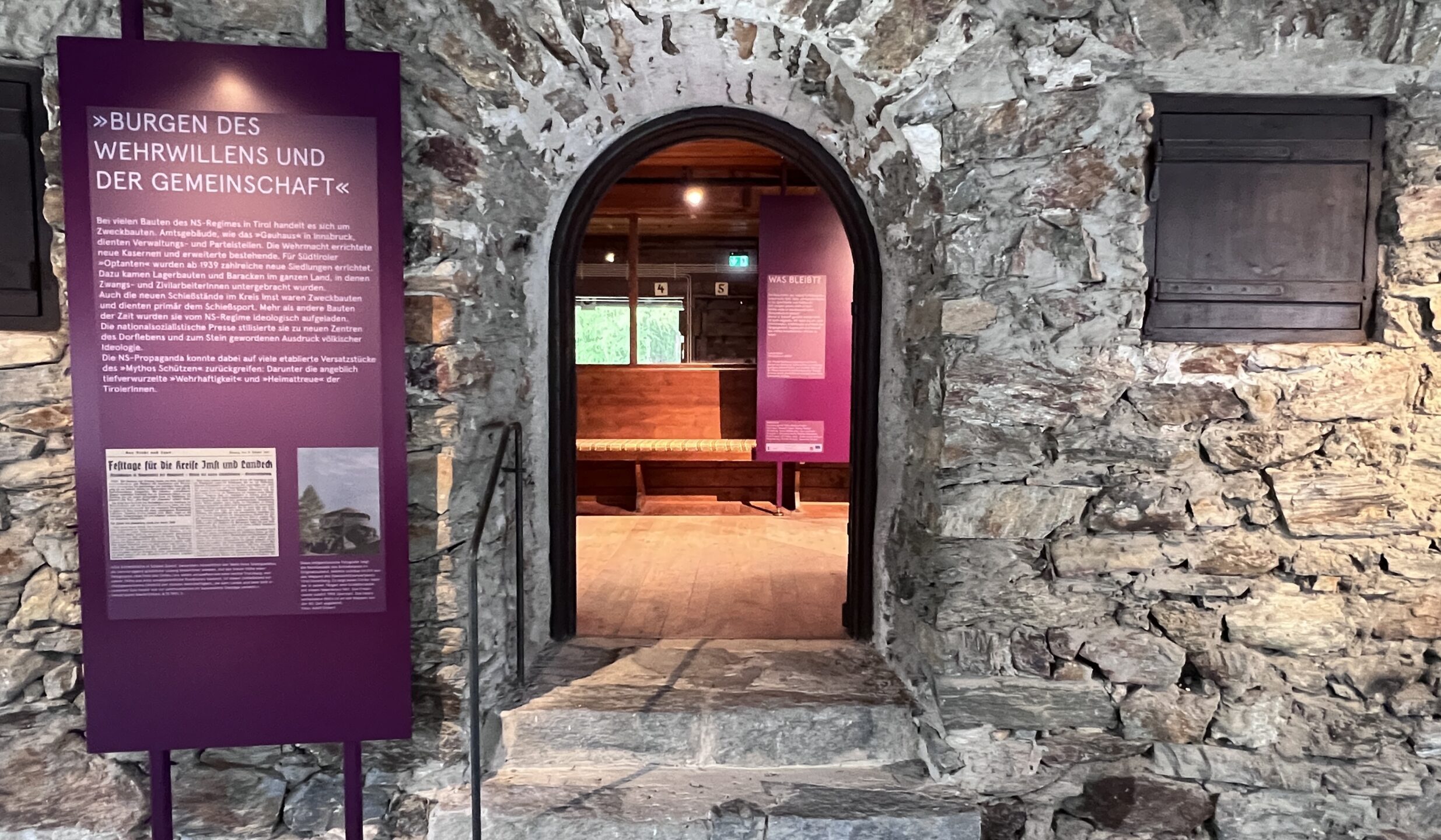
Sölden’s Old Shooting Range was built between 1940 and 1942 by the Nazi party’s district leadership. Until a few years ago, it was used by the Sölden Shooting Club. In 2018, a new shooting range outside the village was put into operation and the Old Shooting Range was placed under a preservation order. It has been empty ever since.
Today it presents itself as an inconspicuous functional building. Its once dominant position above the village and its importance for Nazi propaganda can only be guessed at. Like other buildings from the Nazi era, this one also poses a challenge. It is a relic of the past, but at the same time part of our present.
The exhibition MEMORY UNDER GUARD focuses on the history of the Old Shooting Range and the role of marksmen associations during the years of Nazi rule in the Ötztal.
The German words Schützen, a noun, and schützen, a verb, have the same spelling, but different meanings. The first derives from the word shooting and denotes a “shooter” or more specifically a marksman. The second word means “to guard”. The title of this exhibition alludes to these two different meanings.
Myth of the Marksmen I
Defender of the nation, guardian of tradition, culture bearer, tourism advertising subject… Many attributes are attributed to the Tyrolean marksmen (German: Schützen). These include the supposedly long and unbroken history of Tyrolean marksmanship since the Middle Ages. But what are we actually talking about?
Today, the term “marksmen” or rather Schützen is used to refer to various historical phenomena: from the Landlibell decree of 1511 to Andreas Hofer’s uprising in 1809 and the Tyrolean marksman regiments of the Austro-Hungarian Empire to today’s shooting sports clubs and various heritage associations. The myth of the “marksmen” conceals a history characterized by fractures and many facets. These include the period of Nazism and the Second Word War, which is still ignored in many club chronicles.
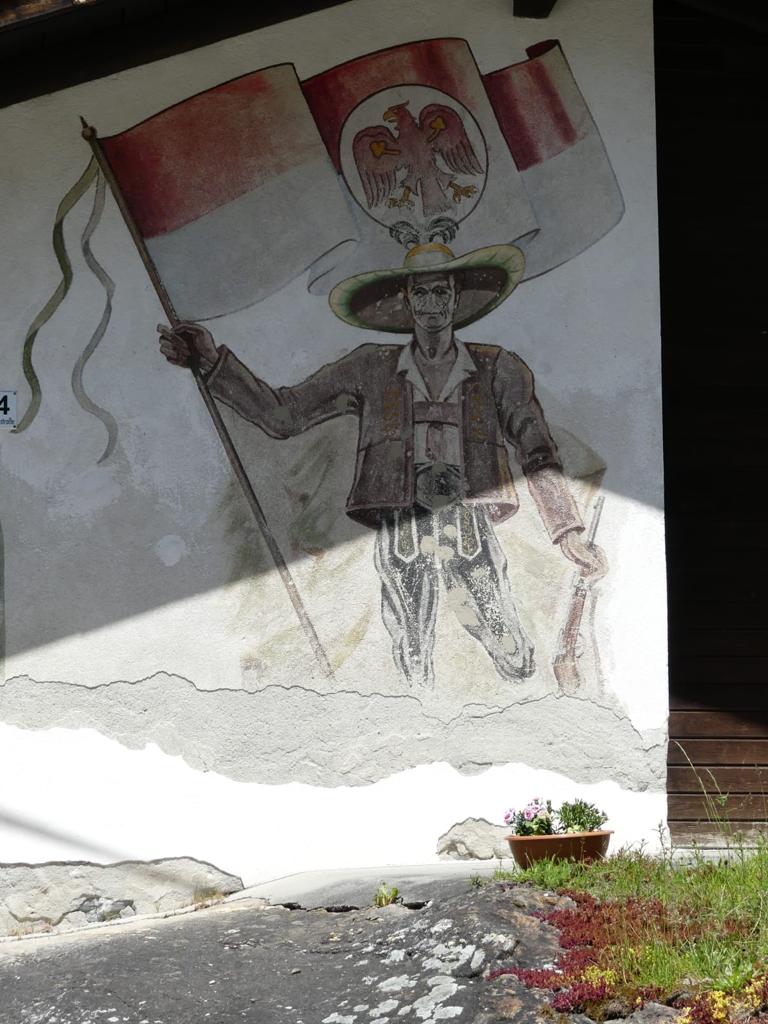
This fresco was only created in the 1970s. It shows the stereotypical image of a “Tyrolean marksman”. At second glance, the depiction is irritating: the Tyrolean national colors white and red are reversed and the coat of arms also deviates from the usual depictions. The fresco unintentionally exposes the myth of the “marksman” as a fragile staging.
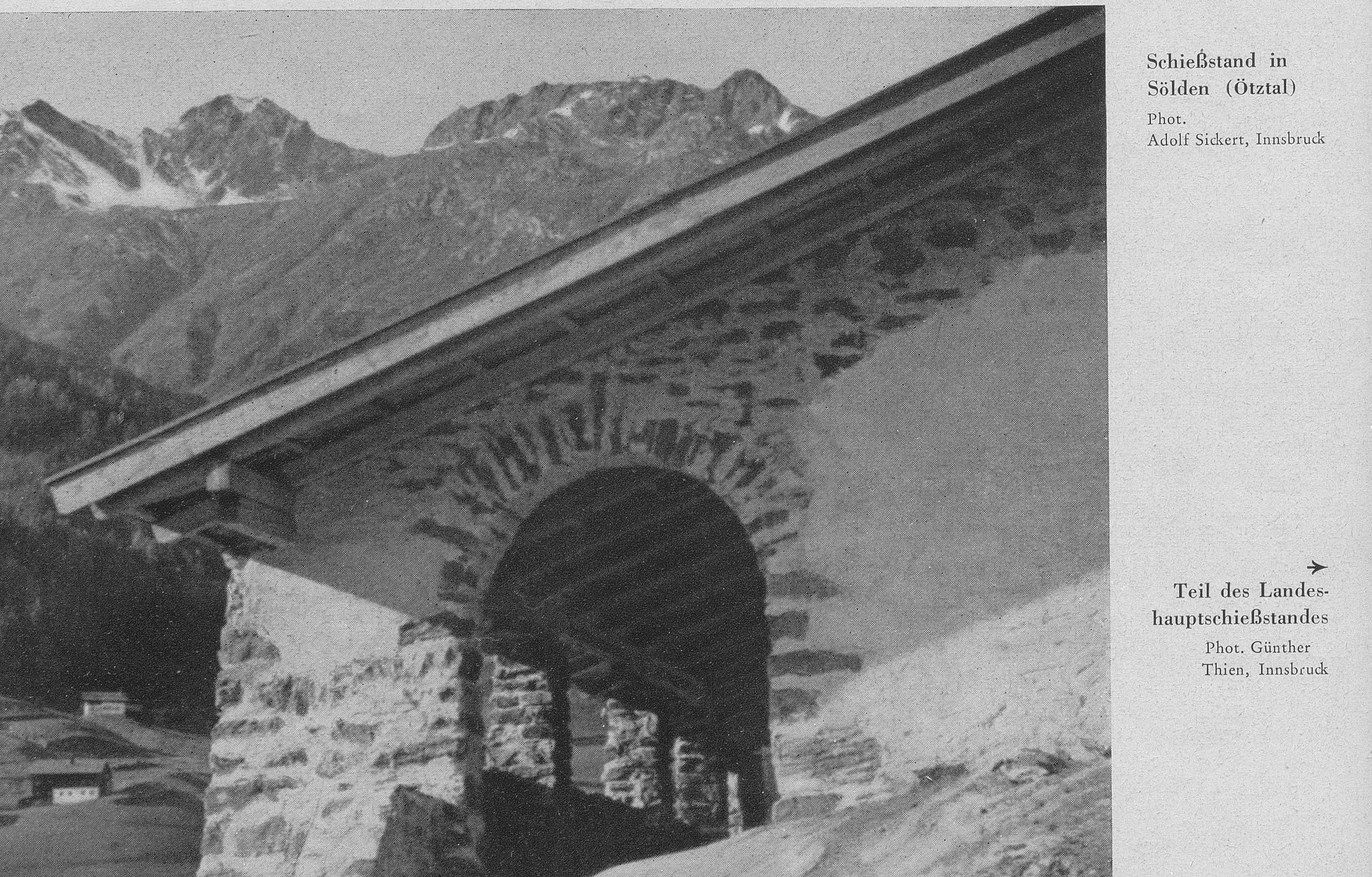
The Old Shooting Range was built between 1940 and 1942. There are only a few pictures that show the original state of the building. This photograph from 1942 shows the entrance area as it was in its original state.
Tyrolean Marksman and the Nazi Regime
The Nazi system rejected civic associations and clubs as they allegedly promoted the “fragmentation of the national community”. After the annexation of Austria in March 1938, clubs and associations throughout Tyrol were systematically dissolved and incorporated into associations under the supervision of the Nazi party.
In the fall of 1938, the “Marksmen Association Tirol-Vorarlberg” (Standschützenverband) was founded. It was headed by Nazi party district leader Franz Hofer. All shooting clubs and heritage marksmen clubs as well as music bands and other folklore associations were forcibly transferred to the association. In the municipalities, the local marksmen’s associations were led by the local Nazi party leaders. Many marksmen and musicians came to terms with the system and actively supported it. There were isolated cases of opposition and resignations, particularly due to the regime’s anti-clerical measures.
The “Marksmen Association” served as the popular face of the Nazi party and was intended to bind large sections of the population to the system. Marksmen parades and regional shooting events became central elements of Nazi mass celebrations in Tyrol. In the last phase of the war, district leader Hofer called up the marksmen as a Volkssturm militia. Most of them no longer fought.

The picture shows a typical Nazi celebration in Ötztal. Marksmen were always present. Nazi district leader Klaus Mahnert (left) with the mayor and local group leader Josef Wassermann (facing away) at a Nazi party rally in Längenfeld in June 1940. The local marching band can be seen in the background.
Myth of the Marksmen II
Even before the First World War, Tyrolean marksmen who practiced voluntarily at the shooting ranges had lost their military significance. The traditional shooting ranges increasingly turned into sports facilities. In the interwar period, many fell into disrepair. It was not until the 1930s that new shooting clubs and ranges began to spring up again. Only some of the new clubs practiced shooting sports. Many shifted their activities to parades in traditional folk costumes. The division into shooting sports clubs and heritage marksmen clubs, which still exists today, began.
During the period of Austrofascism from 1933, marksmen in traditional folk costumes became part of the political staging. The Nazi regime also used the myth of the marksmen to its advantage.
To this day, marksmen are part of the public image in Tyrol – whether at church celebrations, tourist events or political rallies.
Early History of the Shooting Range
The Old Shooting Range was built as part of a district-wide construction program from 1940 onwards. In the district of Imst, each local Nazi party group was to have its own shooting range. This plan was pursued in particular by the then district leader and later member of the Austrian parliament Klaus Mahnert.
The necessary land was transferred to the Nazi party from private or municipal ownership. The party acted as the building owner. An architect was commissioned by the district leadership to draw up the plans. The buildings were financed by contributions in cash and in kind from the respective municipalities. The construction also had to be carried out by the local population in so-called “community work”.
The ambitious program was only partially implemented. In Ötztal, only two new buildings in Sölden and Sautens were ultimately realized. Even outside the valley, only a fraction of the planned buildings were realized due to the war.
Jakob Schillfahrt (born 1908) was a construction engineer from Ludwigshafen (Rhineland-Palatinate, Germany). From 1938 onwards he lived in Imst. In 1940 he joined the Nazi party and was appointed commissioner of the district leadership for shooting range construction. Schillfahrt was largely responsible for all new and rebuilt shooting ranges in the Imst district. His life and work have only just begun to be researched. One of the surprising aspects is the fact that before his Nazi career he had been imprisoned as a prisoner in Dachau concentration camp from 1936 to 1937
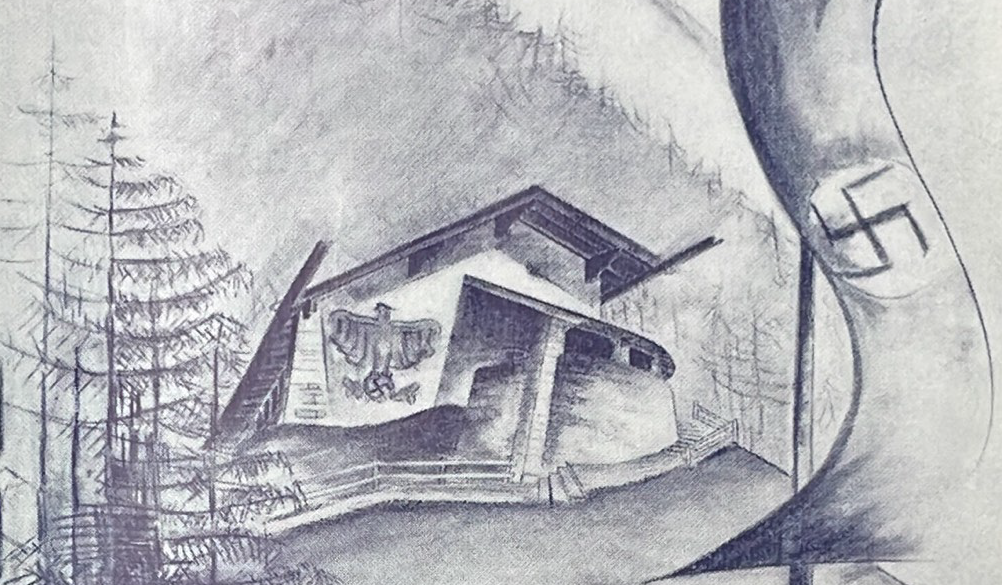
Neither construction files nor original plans exist for the shooting range buildings from the Nazi era. Only a sketch of the Old Shooting Range has survived.
“Fortresses of the Will to Fight and the Community”
Many of the buildings constructed by the Nazi regime in Tyrol were functional buildings. Official buildings, such as the seat of government (Gauhaus) in Innsbruck, served administrative and party offices. The Wehrmacht built new barracks and extended existing ones. Numerous new housing projects were built for South Tyroleans from 1939 onwards. In addition, camps and barracks were built throughout the country to house forced laborers.
The newly built shooting ranges in the Imst district were also functional buildings and were primarily used for shooting sports. More than other buildings of the time, they were ideologically charged by the Nazi regime. The Nazi press stylized them as new centers of village life and an expression of their racist ideology turned to stone.
The Nazi propaganda was able to draw on many established elements of the Myth of the Marksmen: Among them the supposedly deep-rooted fighting spirit and loyalty to the homeland of the Tyroleans.
“The shooting range in Sölden can be described as an outstandingly fortunate solution, especially with regard to the choice of its location. On the free height of a rocky outcrop above the village, looking from below like a real fortress, offering an incomparable panoramic view from its height, this shooting range is a symbol in stone of the proud fighting spirit that gives the land and the people in our district its special character today as it did centuries ago.”
Newspaper report: Innsbrucker Nachrichten, October 6, 1941, p. 6.
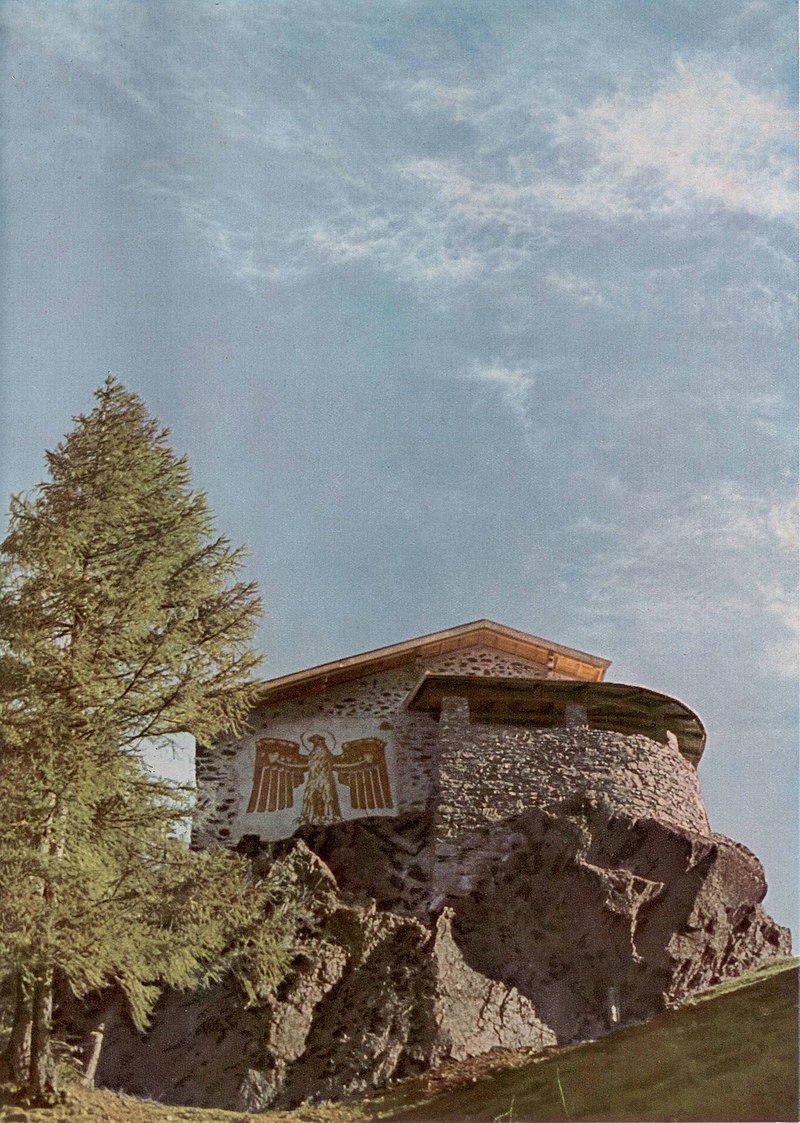
This contemporary photograph shows the northern façade of the shooting range in its original state. The coat of arms of the Marksmen Association Tirol-Vorarlberg was visible from afar in the village. It shows a Tyrolean eagle holding a shooting target with a swastika in its clutches. The fresco was last painted over in 1998. The current motif is based on the coat of arms from the Nazi era.
What remains?
The history of the Old Shooing Range does not end in 1945. For decades, it served as a sports facility and meeting place. It has been standing empty for several years. The building is now a heritage listed building. How it will be used in the future is still uncertain. We invite you to share your memories, stories and ideas about the past, present and future of the Old Shooting Range with us.

Larissa Zauser: Markswomen (2024) (Original title: Schützinnen)
Tyrolean marksmen use traditional folk costume, marches and myths to stage a conservative and masculine image of history that is intended to create a national identity. The fictitious historical postcard of an Ötztal markswoman breaks up this image and questions dominant role models.


